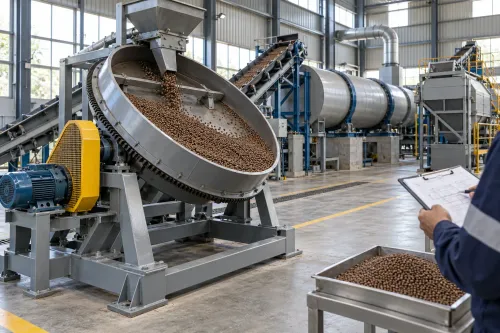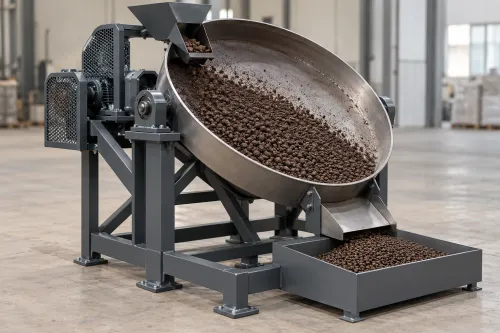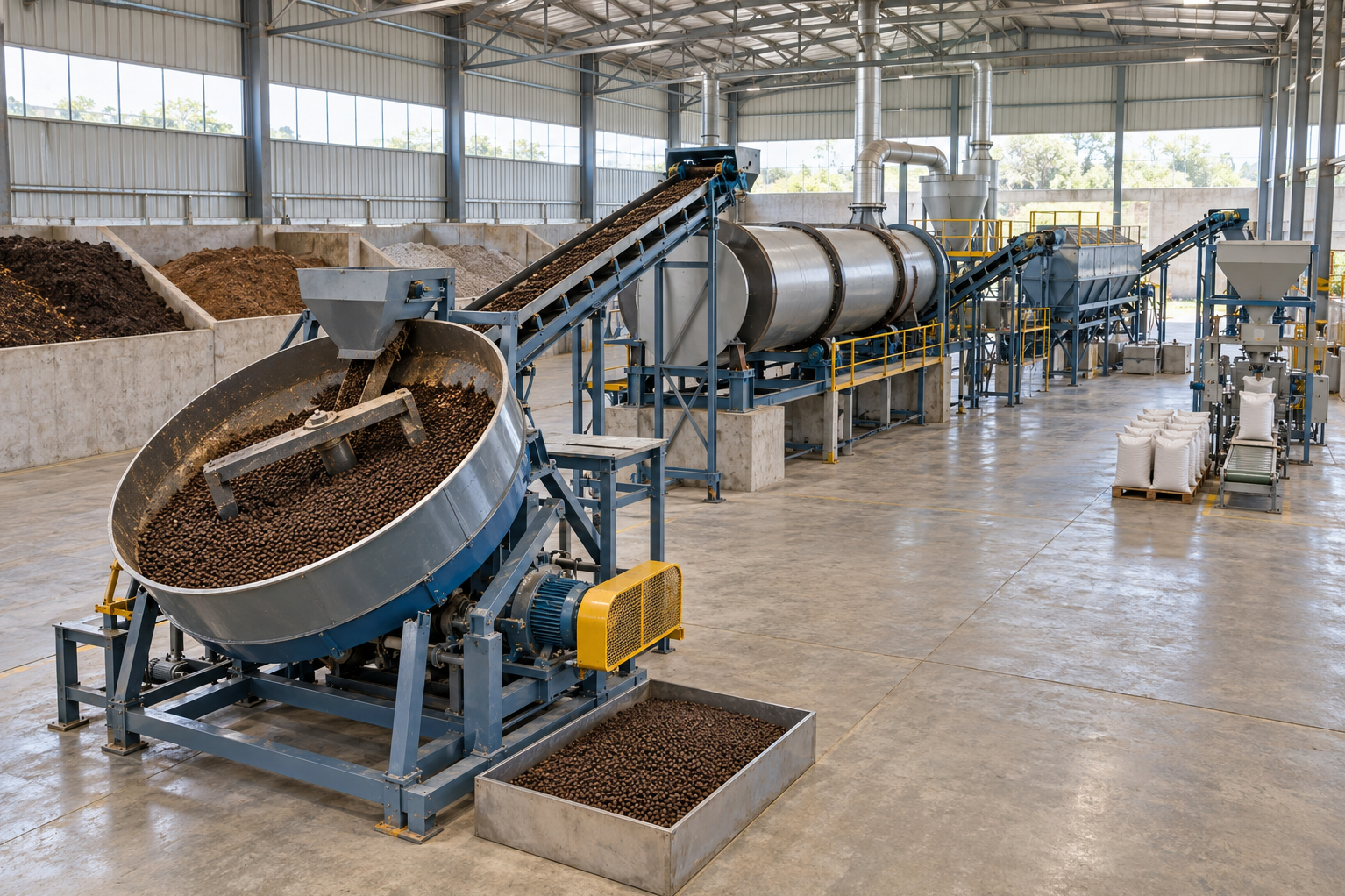
Moving from small-batch fertilizer processing to commercial production changes the role of machinery. Material needs to move continuously, capacities must remain balanced, and every processing stage must support the required final product. An Organic Fertilizer Granule Machine is central to this setup, but commercial readiness depends on the complete plant around it.
For businesses planning fertilizer manufacturing in Nagpur, the most effective approach is to design the process from raw-material entry through final packaging.
Map the Production Flow First
Before ordering equipment, create a basic process flow based on the intended fertilizer formulation.
A commercial organic fertilizer line may involve stages such as:
Raw material handling → Preparation → Mixing → Granulation → Drying → Screening → Finished material transfer → Packaging
The exact arrangement depends on the product and production method.
Mapping these stages exposes potential bottlenecks before equipment is installed.
Balance Machine Capacities
Suppose the granulation section is designed for a particular hourly output but the dryer handles considerably less under the required moisture conditions. In practice, the lower-capacity stage can limit the whole line.
The same problem can occur with conveyors and screening machines.
Plant capacity should therefore be assessed as a system.
Manufacturers should compare the practical throughput of every major stage rather than adding individual machine capacities together.
Plan Material Movement Carefully
Commercial production involves significant quantities of material. Repeated manual transfer between stages can increase labour requirements and interrupt flow.
Appropriately designed conveyors can connect machines and provide more controlled feeding.
The layout should minimize unnecessary movement while maintaining enough clearance for operation, inspection, and maintenance.
Consider Product Recovery and Recycling
Granulation does not normally produce only perfectly sized finished material.
After screening, there may be fines and oversized granules. A commercial plant should have a defined method for collecting and, where technically appropriate, reprocessing these fractions.
This can improve material management and reduce clutter around the production area.
Know When the Project Is Ready for Machinery Selection
Before requesting a final plant proposal, a fertilizer manufacturer should ideally know:
- Raw material composition
- Feed moisture range
- Desired granule specification
- Required hourly output
- Operating hours
- Factory dimensions
- Available utilities
- Packaging requirement
- Expansion expectations
These details enable a more useful technical evaluation.
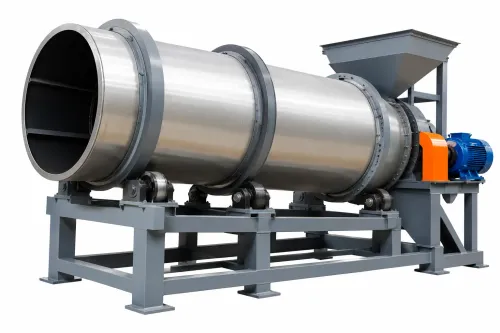
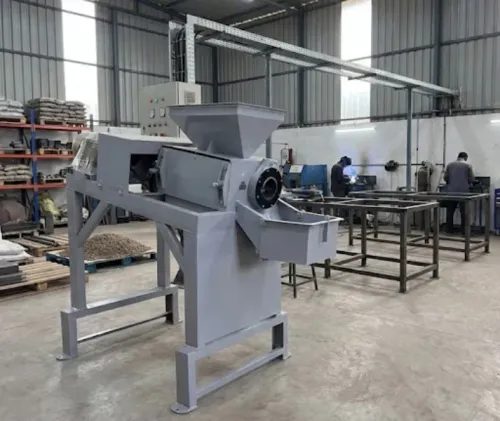
Rk Metal N Engineering operates in Nagpur and manufactures machinery for fertilizer processing, including equipment associated with granulation, drying, screening, and material handling. For commercial projects, discussing the entire processing route can provide a clearer basis for machinery selection than purchasing individual units independently.
Nagpur's position within Maharashtra provides fertilizer businesses access to agricultural markets across the region, but commercial viability still depends on efficient production planning.
The appropriate granule machine is therefore not necessarily the largest available model. It is the machine whose practical output, material compatibility, and operating requirements fit the complete plant.
When granulation, drying, screening, conveying, and packaging are planned together, manufacturers can develop a more coordinated production setup that is prepared for consistent commercial operation.
Organic Fertilizer Granule Machine Plant Planning for Commercial Production in Nagpur
Moving from small-batch fertilizer processing to commercial production changes the role of machinery. Material needs to move continuously, capacities must remain balanced, and every processing stage must support the required final product. An Organic Fertilizer Granule Machine is central to this setup, but commercial readiness depends on the complete plant around it.
For businesses planning fertilizer manufacturing in Nagpur, the most effective approach is to design the process from raw-material entry through final packaging.
Map the Production Flow First
Before ordering equipment, create a basic process flow based on the intended fertilizer formulation.
A commercial organic fertilizer line may involve stages such as:
Raw material handling → Preparation → Mixing → Granulation → Drying → Screening → Finished material transfer → Packaging
The exact arrangement depends on the product and production method.
Mapping these stages exposes potential bottlenecks before equipment is installed.
Balance Machine Capacities
Suppose the granulation section is designed for a particular hourly output but the dryer handles considerably less under the required moisture conditions. In practice, the lower-capacity stage can limit the whole line.
The same problem can occur with conveyors and screening machines.
Plant capacity should therefore be assessed as a system.
Manufacturers should compare the practical throughput of every major stage rather than adding individual machine capacities together.
Plan Material Movement Carefully
Commercial production involves significant quantities of material. Repeated manual transfer between stages can increase labour requirements and interrupt flow.
Appropriately designed conveyors can connect machines and provide more controlled feeding.
The layout should minimize unnecessary movement while maintaining enough clearance for operation, inspection, and maintenance.
Consider Product Recovery and Recycling
Granulation does not normally produce only perfectly sized finished material.
After screening, there may be fines and oversized granules. A commercial plant should have a defined method for collecting and, where technically appropriate, reprocessing these fractions.
This can improve material management and reduce clutter around the production area.
Know When the Project Is Ready for Machinery Selection
Before requesting a final plant proposal, a fertilizer manufacturer should ideally know:
- Raw material composition
- Feed moisture range
- Desired granule specification
- Required hourly output
- Operating hours
- Factory dimensions
- Available utilities
- Packaging requirement
- Expansion expectations
These details enable a more useful technical evaluation.
Rk Metal N Engineering operates in Nagpur and manufactures machinery for fertilizer processing, including equipment associated with granulation, drying, screening, and material handling. For commercial projects, discussing the entire processing route can provide a clearer basis for machinery selection than purchasing individual units independently.
Nagpur's position within Maharashtra provides fertilizer businesses access to agricultural markets across the region, but commercial viability still depends on efficient production planning.
The appropriate granule machine is therefore not necessarily the largest available model. It is the machine whose practical output, material compatibility, and operating requirements fit the complete plant.
When granulation, drying, screening, conveying, and packaging are planned together, manufacturers can develop a more coordinated production setup that is prepared for consistent commercial operation.
Keywords