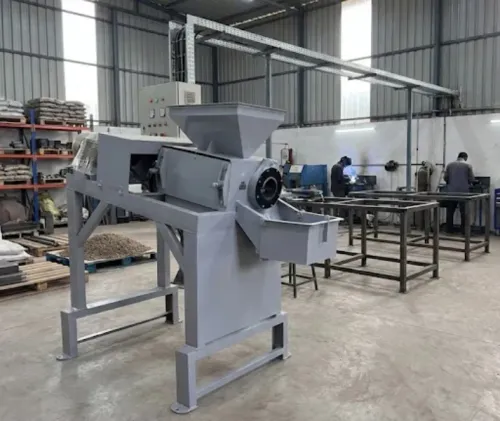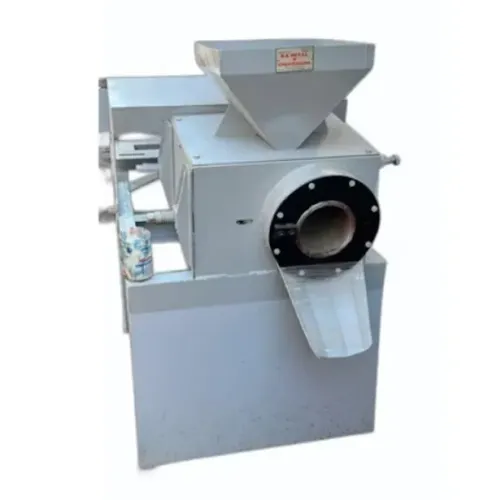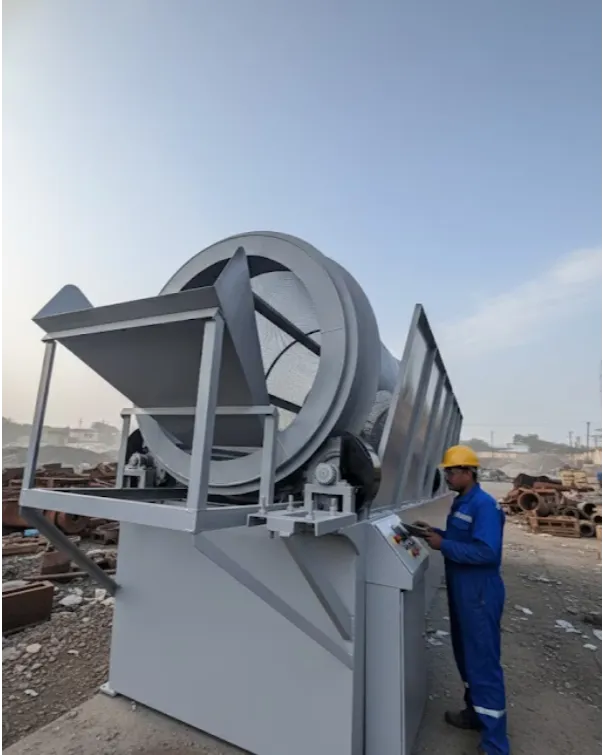
Screening determines which fertilizer granules meet the required size specification before they proceed to packaging or further processing. A Trommel Drum Screen uses a rotating cylindrical screening surface to classify material, making it useful for a range of bulk-processing applications.
For fertilizer manufacturers in Nagpur, choosing the appropriate screening method requires understanding particle characteristics, production volume, and the intended finished-product specification.
How Trommel Screening Works
Material enters a rotating cylindrical drum containing openings of a selected size. Rotation moves and tumbles the material through the drum.
Particles small enough to pass through the openings are separated from larger material. Depending on the equipment configuration, different fractions can be collected or directed toward subsequent processing.
This relatively straightforward principle can be valuable for fertilizer granules, compost-related material, and other suitable bulk products.
Trommel Screening Versus Other Screening Methods
Different screening technologies produce similar broad outcomes but operate differently.
A vibrating screen typically uses vibration to move material across a screening surface. A trommel relies primarily on drum rotation and tumbling.
Neither technology is automatically better for every application.
A fertilizer manufacturer should compare:
- Feed material characteristics
- Moisture level
- Required separation size
- Percentage of fines
- Desired throughput
- Available installation space
- Cleaning requirements
- Maintenance accessibility
The correct option is the one that fits the actual material and process.
Why Screening Efficiency Matters
Pelletizing and granulation processes rarely produce every particle at exactly the same size. The output may include acceptable granules, fines, and oversized pieces.
Without effective screening, this mixed material can reach packaging.
Consistent classification helps manufacturers create a more uniform finished product while identifying material that may be suitable for reprocessing.
For example, fines can potentially return to an earlier stage where the production design permits recycling. Oversized material may require crushing or other processing before being returned.
Avoid Treating the Screen as an Afterthought
Screen capacity must correspond with dryer and granulator output. A screen that cannot process incoming material quickly enough becomes a production bottleneck.
The feeding arrangement is equally important. Dumping material unevenly onto a screen can reduce effective use of the available screening area.
Rk Metal N Engineering operates from Nagpur in Maharashtra's industrial manufacturing sector and produces machinery relevant to fertilizer processing and screening applications.
Before specifying a trommel, fertilizer producers should provide realistic information about material size distribution, moisture, capacity, and the required finished fraction. This allows the screening stage to be designed around actual operating conditions.
A well-matched trommel drum screen can help maintain consistent product classification, but its performance ultimately depends on integration with the rest of the production line. Feeding, drying, screening, recycling, and conveying should all be planned as connected operations.
Keywords