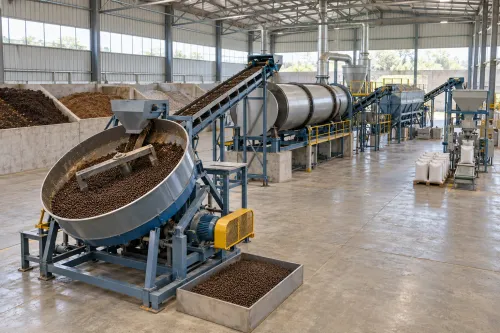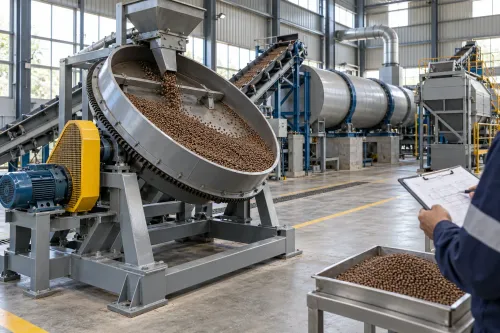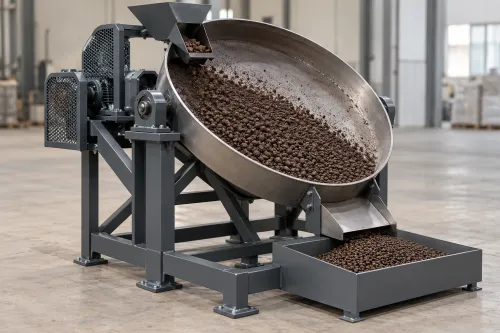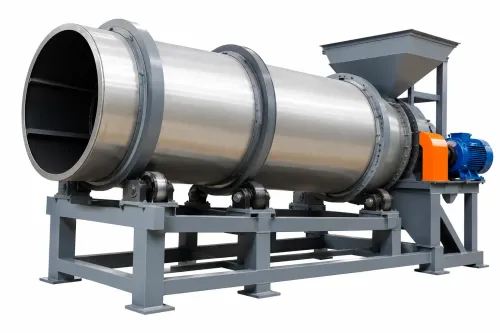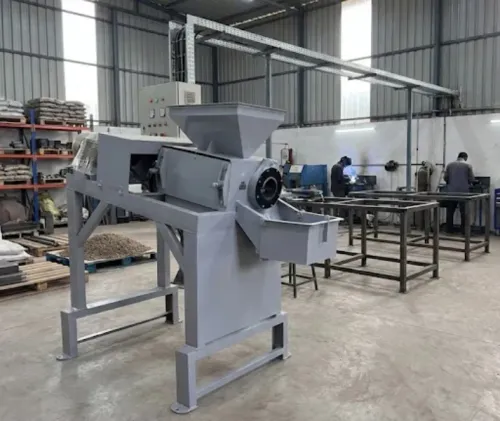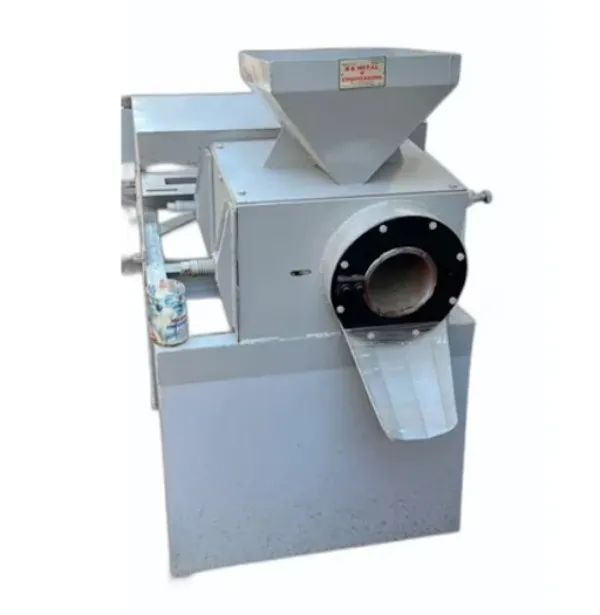
Granulated fertilizers are widely used because their physical form can simplify handling, packaging, storage, and field application. Granule Making Machines are designed to convert appropriately prepared material into particles within a desired granule range, making them an important consideration for fertilizer manufacturers in Nagpur and across Maharashtra.
Understanding how granulation works can help businesses determine whether the process fits their raw material and finished-product requirements.
Why Convert Fertilizer Into Granules?
Loose fertilizer material may contain particles of varying sizes and densities. This can create challenges during transportation, bag filling, storage, and application.
Granulation brings smaller particles together to create larger, more manageable units.
Depending on the formulation and process, a well-controlled granulation stage can contribute to:
- More consistent particle sizing
- Easier bulk handling
- Better material flow
- More convenient packaging
- Reduced separation of certain blended components
- Improved suitability for mechanical fertilizer application
These advantages depend on achieving stable granules rather than simply increasing particle size.
Moisture Has a Major Influence
Granulation frequently requires careful moisture control. Too little moisture can prevent particles from binding effectively. Excess moisture may produce sticky material, irregular granules, or an unnecessarily high drying load.
Operators therefore need to monitor both incoming material condition and processing parameters.
Feed rate is another important factor. Uneven feeding can lead to fluctuations in granule formation and downstream equipment loading.
What Happens After Granulation?
Granules leaving the forming stage may require drying to reach an appropriate final moisture level. Screening is then used to classify the dried material.
Correctly sized granules move toward final handling or packaging. Depending on the plant design, undersized and oversized material may be reprocessed rather than immediately discarded.
This can help manufacturers manage raw material more efficiently.
Matching Machinery to Production Requirements
Equipment should be selected after evaluating:
- Fertilizer formulation
- Raw material particle size
- Moisture range
- Required granule dimensions
- Hourly production target
- Operating schedule
- Drying requirements
- Screening specifications
- Available production area
Rk Metal N Engineering manufactures processing equipment in Nagpur for industrial applications that include fertilizer production systems.
For Maharashtra-based fertilizer businesses, another useful consideration is future capacity. A plant designed tightly around current production may become difficult to expand when demand increases. Allowing for appropriate conveying routes, equipment access, and downstream capacity can make later modifications easier.
Granulation is therefore best understood as part of a production sequence rather than an independent operation. Reliable fertilizer manufacturing depends on preparation, controlled granule formation, drying, size classification, and material movement working in coordination.
Getting those fundamentals right helps manufacturers achieve a more predictable process and a finished fertilizer that is easier to handle throughout the supply chain.
Keywords