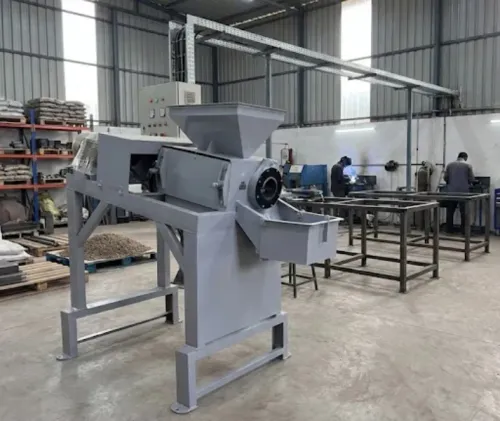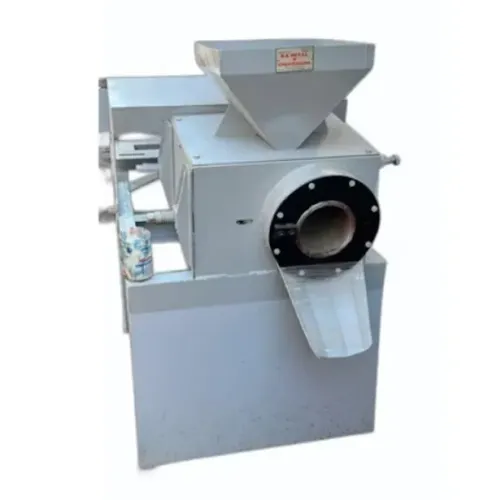
Producing organic fertilizer pellets requires control over both the material and the processing conditions. An Organic Fertilizer Pelletizer provides the mechanical stage where prepared fertilizer feed is transformed into pellets or granules suitable for subsequent drying, screening, handling, and packaging.
For fertilizer manufacturers in Nagpur and agricultural supply businesses across Maharashtra, understanding this process helps when planning new production capacity or improving an existing line.
The Process Begins Before Pelletizing
Raw organic material normally needs preparation before entering a pelletizer. Depending on its source and characteristics, preparation may involve composting, crushing, screening, mixing, or moisture adjustment.
The goal is to achieve feed material that is sufficiently consistent for stable processing.
Several variables influence pellet formation:
- Moisture content
- Particle size
- Material composition
- Binder requirement, where applicable
- Feed consistency
- Machine operating parameters
- Desired pellet dimensions
Variation in any of these can affect the finished output.
What Happens Inside the Pelletizing Stage?
Once prepared material enters the equipment, mechanical movement encourages particles to combine and form larger, denser units. The specific pellet-forming action depends on the equipment design and fertilizer formulation.
Successful processing aims to produce material within a useful size range without excessive fines or oversized pieces.
However, freshly formed pellets are not necessarily ready for packaging.
Drying and Screening Complete the Process
Fresh fertilizer pellets can contain moisture that needs to be reduced for stable handling and storage. A suitable drying system removes a controlled portion of this moisture.
After drying, screening separates the material according to size. This creates a more uniform commercial product while allowing off-size material to be managed appropriately.
A practical processing sequence can therefore look like:
Preparation → Mixing → Pelletizing → Drying → Screening → Conveying → Packaging
The sequence may be modified according to the raw material and plant requirements.
Why Material Testing Matters
Two organic fertilizer formulations can behave very differently even when processed through similar machinery. A material containing fine compost may respond differently from one containing fibrous agricultural residues.
This is why machine selection should account for actual feedstock characteristics rather than production capacity alone.
For a Nagpur manufacturer, regional raw material availability can also influence equipment planning. Maharashtra has diverse agricultural activities, meaning organic fertilizer producers may work with different biomass and compost feedstocks.
Rk Metal N Engineering operates in the manufacturing sector in Nagpur and supplies machinery relevant to fertilizer processing and associated production requirements.
A well-planned pelletizing system starts with understanding the material. Manufacturers should establish feed characteristics, required pellet size, expected output, moisture parameters, and downstream processing needs before finalizing machinery.
When these variables are aligned, the pelletizer becomes an effective component within a controlled fertilizer manufacturing process rather than an isolated machine expected to solve every production challenge.
Keywords